
 By
By 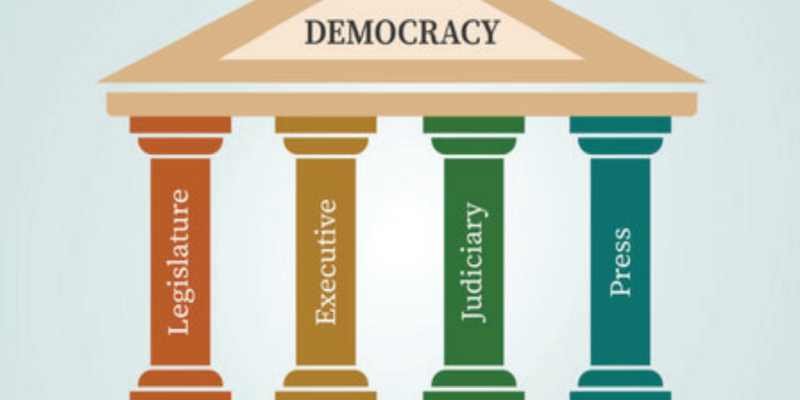
The 4 pillars of democracy are: (1) Popular Sovereignty, (2) Rule of Law, (3) Separation of Powers, and (4) Protection of Civil Rights and Liberties. These four foundations work together to create a government that is accountable to its citizens while protecting individual freedoms.
Without any one of these pillars, a democratic system weakens or collapses entirely. Authoritarian regimes historically dismantle these pillars one at a time, which is why understanding them matters for every citizen.
Pillar 1: Popular Sovereignty
Popular sovereignty means that the ultimate political authority rests with the people, not with a ruler, military, or elite group. Government power is derived from the consent of the governed.
- In practice, this means free and fair elections where citizens choose their representatives.
- It also means that government actions must reflect the will of the majority while respecting minority rights.
- Referendums, public consultations, and the right to vote are all expressions of popular sovereignty.
Pillar 2: Rule of Law
The rule of law holds that no person, including government officials, is above the law. Laws must be publicly known, consistently applied, and enforced without bias.
- Every citizen has the right to a fair trial and due process.
- Government officials who break the law face the same consequences as ordinary citizens.
- Courts must be independent from political pressure to enforce this principle.
Pillar 3: Separation of Powers
Power is divided among three branches of government to prevent any single person or group from gaining total control.
| Branch | Function | Example (USA) | Checks On |
|---|---|---|---|
| Legislative | Makes laws | Congress (Senate + House) | Executive and Judicial |
| Executive | Enforces laws | President + Cabinet | Legislative and Judicial |
| Judicial | Interprets laws | Supreme Court | Legislative and Executive |
The checks and balances system means each branch can limit the others. The President can veto legislation; Congress can override the veto; courts can declare laws unconstitutional.
Pillar 4: Protection of Civil Rights and Liberties
Democracy does not just mean majority rule. It also requires that the rights of every individual be protected, regardless of their race, gender, religion, or political views.
- Civil liberties: Freedom of speech, press, religion, and assembly.
- Civil rights: Equal treatment under the law, freedom from discrimination.
- These rights are typically enshrined in a constitution or bill of rights that is difficult for governments to change.
Quick Reference: All 4 Pillars at a Glance
| Pillar | Core Idea | What It Prevents | Real-World Example |
|---|---|---|---|
| Popular Sovereignty | People hold political power | Dictatorship | Free elections |
| Rule of Law | No one is above the law | Corruption, tyranny | Independent judiciary |
| Separation of Powers | Power divided among 3 branches | Authoritarian rule | US Constitution structure |
| Civil Rights & Liberties | Individuals have protected rights | Oppression, discrimination | First Amendment rights |
Why These Pillars Matter Today
Democratic backsliding, where governments gradually erode democratic norms without formally abolishing them, is a documented trend in several countries. Understanding these pillars helps citizens recognize when they are under threat.
When a government attacks press freedom, it is chipping away at civil liberties. When it packs courts with loyalists, it undermines the rule of law. When elections are manipulated, popular sovereignty is compromised. The pillars are interconnected, and protecting all four is what makes democracy resilient.











Comments